
Key Growth Drivers Behind India's Rising Demand for Lithium Batteries


India’s energy storage industry is going through a major transformation. For decades, lead-acid batteries were the standard choice for vehicles, inverters, telecom systems, and backup power. However, growing demand for efficient, lightweight, long-lasting, and low-maintenance energy storage is rapidly changing the market.
Today, lithium-ion batteries are becoming increasingly important across electric mobility, renewable energy, home backup, commercial power, and industrial applications. As these markets continue to expand, the role of a reliable lithium battery manufacturing company is becoming increasingly important in supporting India’s transition toward advanced energy storage..
India’s Lithium Battery Market Is Growing Rapidly
India’s lithium-ion battery market is experiencing strong growth as businesses and consumers increasingly move away from traditional battery technologies. The demand is being supported by several industries rather than one specific application.
Electric vehicles, renewable energy projects, solar storage systems, telecom infrastructure, UPS systems, and residential backup solutions are all contributing to the growing requirement for lithium batteries.
The important factor behind this growth is that lithium-ion technology is no longer limited to premium or specialized applications. It is gradually becoming a practical energy storage solution for everyday use.
This creates significant opportunities for every lithium battery manufacturing company capable of delivering reliable, safe, and application-specific battery solutions.
Electric Mobility Is Driving Lithium Battery Demand
Electric mobility is one of the biggest drivers of lithium battery demand in India. While electric passenger cars receive significant attention, two-wheelers and three-wheelers have played a particularly important role in accelerating EV adoption.
Electric two-wheelers require batteries that can provide sufficient range while keeping the vehicle lightweight and efficient. A 2 wheeler lithium ion battery can offer high energy density, lower weight, efficient charging, and a longer cycle life compared with conventional battery technologies.
The increasing number of electric vehicles also creates recurring demand. Batteries eventually require replacement, while growing EV adoption creates demand for servicing, diagnostics, higher-capacity battery packs, and advanced Battery Management Systems.
As more consumers and fleet operators transition toward electric mobility, automotive applications are expected to remain one of the strongest sources of lithium battery demand.
Government Policies Are Supporting Battery Manufacturing
Government initiatives have also contributed to the growth of India's electric mobility and battery ecosystem.
The FAME scheme helped encourage EV adoption, while the Production-Linked Incentive (PLI) scheme for Advanced Chemistry Cells has encouraged investment in domestic battery manufacturing.
Domestic manufacturing is important because India's long-term battery requirements cannot depend entirely on imports. Increasing local production can help strengthen the supply chain, develop technical expertise, improve quality control, and support the growth of the EV and renewable energy industries.
For customers looking for a reliable lithium battery manufacturing company, the expansion of India's domestic manufacturing ecosystem can also provide better access to locally manufactured products and technical support.
Renewable Energy Is Creating New Demand for Battery Storage
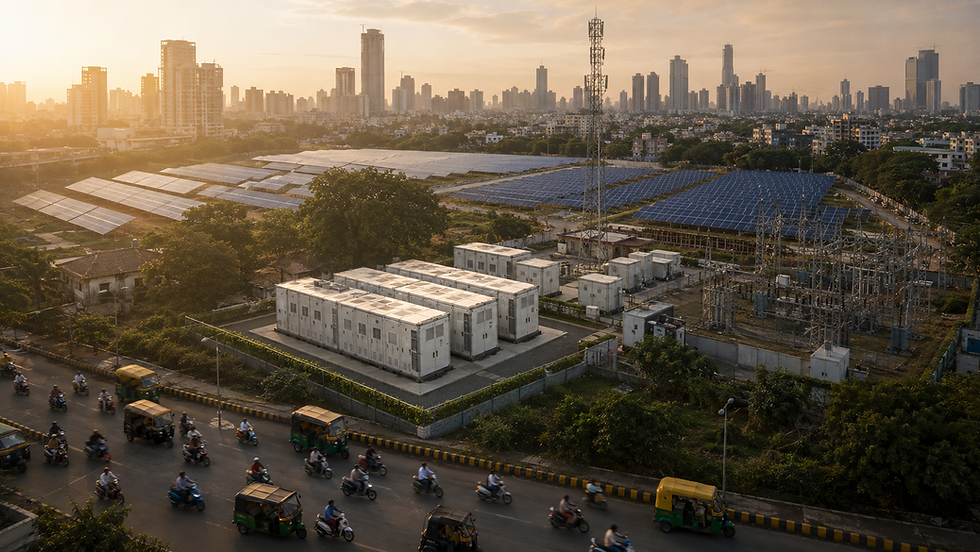
India is rapidly expanding solar and wind energy capacity. However, renewable electricity generation does not always match the timing of electricity consumption.
Solar energy, for example, is generated primarily during daylight hours, while demand often continues into the evening. Energy storage systems can help solve this mismatch by storing excess electricity and making it available when required.
Lithium-ion batteries are increasingly being used for energy storage because of their energy density, efficiency, scalability, and ability to handle repeated charge-discharge cycles.
As India adds more renewable energy capacity, battery storage will become increasingly important for improving energy utilization and grid flexibility. This creates another major growth opportunity for the lithium battery manufacturing industry beyond electric vehicles.
Home and Commercial Backup Power Is Moving Toward Lithium
The transition toward lithium batteries is also taking place in homes, offices, telecom towers, businesses, and data centers.
Traditional backup systems have typically relied on lead-acid batteries. However, users are increasingly looking for alternatives that require less maintenance, occupy less space, and provide better long-term performance.
A lithium ion inverter battery can provide reliable backup power while taking up considerably less space than many conventional battery systems. Lithium batteries are also well suited to applications involving frequent charging and discharging.
For homes using rooftop solar, a solar inverter battery can store excess electricity generated during the day and make it available during evening hours or power interruptions.
Businesses can also use lithium UPS batteries for backup applications where reliability, battery life, and reduced maintenance are important considerations.
Why Lithium Batteries Are Replacing Lead-Acid Batteries
The shift from lead-acid to lithium is largely driven by performance and lifecycle advantages.
Depending on the application and battery chemistry, lithium batteries can provide:
Higher energy density
Lower weight
Longer cycle life
Faster charging
Lower maintenance requirements
Better space utilization
Efficient repeated charge-discharge performance
Advanced monitoring through Battery Management Systems
These characteristics make lithium technology suitable for electric vehicles, solar energy storage, home backup, telecom, UPS systems, and commercial energy storage.
As the cost and availability of lithium battery solutions continue to improve, more consumers and businesses are likely to consider them as a practical alternative to traditional batteries.
Domestic Battery Manufacturing Is Strengthening India’s Supply Chain
Growing demand needs to be supported by reliable supply. This is where domestic battery manufacturing is becoming increasingly important.
Several large-scale battery manufacturing projects are being developed in India with support from private investment and government initiatives. At the same time, interest in domestic lithium resources has increased because long-term raw material security is important for the development of a strong battery ecosystem.
India still depends significantly on imported raw materials and components in the near term. However, increasing domestic manufacturing capacity can gradually strengthen the country's position across the battery value chain.
A capable lithium battery manufacturing company can contribute to this transition by combining battery technology, manufacturing capabilities, quality control, safety systems, testing, and after-sales support.
Battery Safety and Quality Are Becoming More Important
As lithium batteries become more common, safety and reliability are becoming just as important as battery capacity.
A battery’s performance depends on several factors, including cell quality, pack design, thermal management, charging systems, and the Battery Management System (BMS).
This is particularly important in India because batteries may operate in high temperatures, humidity, heavy traffic conditions, and challenging infrastructure environments.
For electric mobility and commercial applications, relevant safety standards and testing requirements are also essential. Customers are increasingly looking beyond the initial purchase price and considering battery lifecycle, reliability, warranty, service, and safety.
Therefore, selecting an experienced lithium battery manufacturing company can have a significant impact on long-term performance.
Why Choosing the Right Lithium Battery Manufacturing Company Matters
The growing lithium battery market presents opportunities for EV manufacturers, fleet operators, renewable energy businesses, telecom companies, and residential users.
However, battery quality can vary significantly between manufacturers. A reliable manufacturer should have strong capabilities across product design, manufacturing, testing, safety, and customer support.
Before selecting a battery supplier, businesses should consider:
Battery cell and component quality
Battery Management System technology
Thermal protection
Manufacturing capacity
Safety testing and certifications
Warranty and after-sales support
Technical service
Remote monitoring or diagnostics
Experience with the intended application
These factors become particularly important when batteries are used in electric mobility, solar storage, UPS systems, and other applications where battery failure can affect business operations.
Neuron Energy: Building Lithium Battery Solutions for India
Neuron Energy has been working in the battery industry since 2018, focusing on lithium battery solutions designed for real-world Indian operating conditions.
The company states that its battery packs use intelligent Battery Management Systems with advanced thermal protection. Its two- and three-wheeler batteries are AIS 156 Amendment III Phase 2 approved.
Neuron Energy also states that it has more than 1 GWh of manufacturing capacity, over 116,500 batteries on the road, and more than 15 service centers. Bluetooth-enabled remote diagnostics support monitoring and servicing throughout the battery lifecycle.
Its solutions are designed for applications including electric mobility, energy storage, inverter systems, and other power backup requirements.
The Future of Lithium Battery Manufacturing in India
India’s lithium battery demand is being supported by multiple long-term trends. Electric mobility is expanding, renewable energy capacity is increasing, energy storage is becoming more important, and homes and businesses are looking for more efficient backup solutions.
This means the future of lithium batteries in India is not dependent on a single industry.
The next stage of growth, however, will depend on reliability, safety, manufacturing quality, lifecycle performance, and customer support. Companies that can consistently deliver high-quality batteries and dependable service are likely to play an important role in India's growing energy storage ecosystem.
For businesses exploring EV batteries, solar storage, home backup, or UPS applications, choosing the right lithium battery manufacturing company can make a significant difference to long-term performance and reliability.
Explore our complete range of EV battery solutions today: https://www.neuronenergy.in/
Frequently Asked Questions
1. What is driving the demand for lithium batteries in India?
The major growth drivers include electric vehicle adoption, renewable energy storage, government support for domestic battery manufacturing, residential backup power, telecom infrastructure, and the replacement of traditional lead-acid batteries.
2. Why are lithium batteries popular for electric two-wheelers?
Lithium batteries offer high energy density, lower weight, efficient charging, longer cycle life, and lower maintenance requirements, making them suitable for electric two-wheelers and three-wheelers.
3. How do I choose the right lithium battery manufacturing company?
Consider the manufacturer’s battery technology, manufacturing capacity, BMS, thermal protection, safety standards, testing, warranty, after-sales service, and experience in your specific application.
4. Can lithium batteries be used for home solar systems?
Yes. Lithium batteries can be used with solar energy systems to store excess electricity generated during the day and provide power when solar generation is unavailable.
5. What is the future of lithium battery manufacturing in India?
The outlook is strong because demand is increasing across electric vehicles, renewable energy storage, residential backup, telecom, UPS systems, and commercial energy storage. Growing domestic manufacturing capacity is also expected to strengthen India's battery ecosystem.


Comments